
Property Condition Assessments Austin TX: A Guide for Buyers, Lenders and Owners
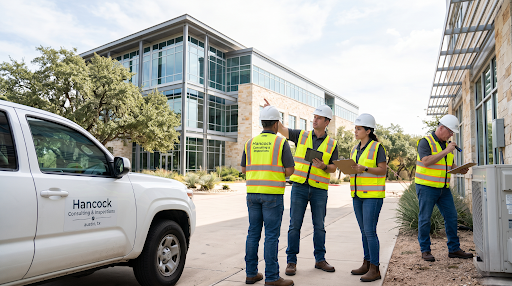
The offer is drafted, the lender is asking for paperwork, and nobody can tell you whether the roof in that Austin strip center has two years left or twelve. That uncertainty is exactly why buyers, lenders and owners order property condition assessments Austin TX deals depend on. A good one turns a building's age and wear into a clear list of what needs attention and when.
Hancock Consulting & Inspections, PLLC lists property condition assessments among its commercial services in Austin, San Antonio and New Braunfels, TX. This guide explains what a PCA is, what it usually finds, how it differs from a standard inspection, and how to read the report once it lands in your inbox.
Quick Answers
Question | Direct Answer |
What is a property condition assessment? | A site-specific review of a commercial parcel's primary improvements, based on a walk-through survey and research. |
Who orders one in Austin? | Buyers, lenders and owners. ASTM E2018 says PCAs are typically prepared for the parties to a transaction. |
Is it the same as a home inspection? | No. A PCA looks at commercial buildings and focuses on material deficiencies and remedies, not a room-by-room homeowner checklist. |
Does a PCA find everything? | No. ASTM E2018 states a PCA is not intended to be technically exhaustive. |
How do I get one from Hancock? | Call 830-608-1200 or use the contact page. Pricing and turnaround are not published on the site. |
What Property Condition Assessments Austin TX Buyers Order Actually Cover
What is actually being assessed? Under ASTM E2018, a PCA relates to the physical condition of the primary improvements on a specific parcel of commercial real estate. The goal is to identify and communicate material physical deficiencies, and the work product is a property condition report that can include opinions of cost for suggested remedies. It does not cover things like economic obsolescence or off-site conditions.
On its commercial page, Hancock lists the systems it evaluates: HVAC, roof, foundation, plumbing, electrical, structural, doors, windows, ceilings, floors, walls, grading and drainage, and parking. The site says the assessment can be done on any commercial building, from office buildings and shopping centers to medical centers, warehouses and restaurants.
Commercial Property Evaluations Austin TX: Typical Findings by System
Every building ages differently, but the same handful of items tend to shape the conversation on a commercial deal. The table below is a general reference for what reviewers look at in a Central Texas building, not a list of Hancock's own findings.
System | What Reviewers Look For | Why It Matters in the Deal |
Roof | Membrane wear, ponding, flashing, past patches | Replacement is often the largest single capital item |
Foundation and structure | Movement, cracking, drainage near the slab | Austin's clay-heavy soils make movement a common question |
HVAC | Age, condition, access, signs of deferred service | Rooftop units near end of life affect tenant comfort and budgets |
Grading and drainage | Water flow away from the building | Standing water shortens the life of paving and foundations |
Parking | Surface condition and general layout | Often overlooked until a tenant or lender asks |
Commercial Property Inspections Austin TX vs a Property Condition Assessment
Is a PCA just a commercial inspection by another name? In everyday conversation, people use the terms loosely, and many Austin inspectors offer both. The practical difference is the question being answered. A standard inspection asks what is wrong today. A PCA, as ASTM E2018 frames it, also supports a decision, which is why the report is written for a transaction party and can include cost opinions for remedies.
Topic | Standard Inspection | Property Condition Assessment |
Main output | List of observed defects | Report on material deficiencies, often with remedy cost opinions |
Framework | Inspector's standards of practice | ASTM E2018 is a common voluntary guide |
Best used | Before closing on a house | During commercial due diligence |
If you are unsure which product you need, a short call before ordering is the cheapest step you can take.
Real Estate Inspections Austin TX: Who Is Doing the Work Matters
Does the inspector's license matter on a commercial job? It is worth asking. The Texas Real Estate Commission lists three inspector license levels on its site: Apprentice Inspector, Real Estate Inspector and Professional Real Estate Inspector, and it offers a license holder search. Hancock's site lists Wade Hancock as a Professional Inspector, TREC #20451, and its resources page says he brings more than 20 years of commercial and industrial design experience. Verify any license on the TREC search before you sign.
The site describes the firm as 100% independent and says reports include 60+ photos. Those are the firm's own claims, so ask for a sample report.
Property Condition Assessments San Antonio TX and New Braunfels: One Firm, Three Markets
Hancock lists Austin, San Antonio and New Braunfels as its service areas, with its office at 212 Autumn Oak, New Braunfels, TX 78132. The site names no other cities. Buyers looking at property condition assessments San Antonio TX properties would follow the same steps below, though local soil and drainage shape what gets flagged.
Searching for a commercial inspector near me usually means a drive, not a different process. Whether the building is downtown Austin, along the South Congress corridor, or a suburban retail center in the Round Rock, Cedar Park, Georgetown, Pflugerville or Lakeway area, confirm with the firm that the address is within its range before you schedule.
How to Read a Property Condition Report
What should you look at first? Start with the material deficiencies and immediate repairs, then compare the cost opinions against the asking price and your lender's requirements. A flagged system may still call for a specialist's follow-up.
Step | Action | Tip |
1 | Gather the documents before the visit | Hancock suggests the certificate of occupancy, permits, leases, plans, surveys, equipment service contracts and code or ADA records |
2 | Confirm scope in writing | Match the systems listed to what your lender asks for |
3 | Attend or schedule a walkthrough call | Ask the inspector to explain anything marked urgent |
4 | Sort findings into immediate, near-term and long-term | Budget by year, not just by total |
5 | Request follow-up evaluations if needed | Air quality or specialty equipment reviews can be added |
6 | Use the report in negotiation | Tie each price request to a documented finding |
Want to talk through your property before ordering? See Hancock's commercial inspection page or call 830-608-1200 during published hours.
Questions to Ask Before You Hire a PCA Provider
What should you ask the inspector? Ask which standard or guide the report follows, who will be on site, what is excluded from scope, whether cost opinions are included, how photos are used, and how long delivery usually takes. Hancock's site mentions fast turnaround but publishes no timeframe, so get the number in writing for your deal's deadline.
TALK TO A LOCAL INSPECTOR ABOUT YOUR AUSTIN PROPERTY Hancock Consulting & Inspections serves Austin, San Antonio and New Braunfels. Call 830-608-1200 (Mon to Fri 8 AM to 7 PM, Sat 9 AM to 4 PM) or visit the contact page to ask about a commercial property condition assessment. |
Summary
A property condition assessment (PCA) is a site-specific review of the physical condition of the primary improvements on a commercial parcel, usually ordered by buyers, lenders and owners before a transaction. ASTM E2018 describes a baseline PCA process built on a walk-through survey and research, with a report that identifies material physical deficiencies. Hancock Consulting & Inspections, PLLC lists property condition assessments among its commercial services for Austin, San Antonio and New Braunfels, TX.
Key Takeaways
A PCA reviews the physical condition of a commercial parcel's primary improvements.
ASTM E2018 is a voluntary guide and says a PCA is not technically exhaustive.
Reports aim to identify material deficiencies and may include cost opinions.
A PCA differs from a standard inspection in audience, output and purpose.
Hancock lists commercial PCAs for Austin and San Antonio.
Verify any inspector's license through the TREC license holder search.
Pricing and turnaround are not published; request both in writing.
Frequently Asked Questions
1. When in a deal should I order a PCA?
As early as your due diligence period allows, since follow-up evaluations need room in the schedule.
2. Can a lender require a PCA?
Often, but requirements vary. Ask your lender which scope and format it will accept before you order.
3. Does a PCA include an environmental review?
Not by itself. ASTM E2018 does not address off-site conditions, and Hancock's commercial page treats environmental reports as separate documents you obtain from others.
4. Can an owner order one without selling?
Yes. Owners use assessments to plan capital repairs and deferred maintenance.
5. How do I verify an inspector's license in Texas?
Use the license holder search on the Texas Real Estate Commission website and choose the inspector license type. Hancock lists Wade Hancock as TREC #20451.


